No matter what industry segment you may be in, there is an application for the use of digital signage.
As a consumer it is likely that you have seen an increasing number of TV screens installed in public areas such as local malls, airports, health clubs, stadiums, retail stores, restaurants, above gas pumps, food menu boards, and more — this is referred to as digital signage. Digital signage is typically used as an advertising medium to educate or increase awareness.
Digital signs have marked benefits in comparison to traditional static signs, including the ability to update content remotely over the web, adapt the screens to viewers, and even interact with a local audience.
However “the most cited benefit of digital signage is to place information anywhere it needs to be updated often—automatically through an existing IT network—increasing workplace efficiencies by reducing time-consuming micro tasking of personnel who can now be reassigned to less redundant activities,” according to David Little, a charter member of the Digital Screenmedia Association.
“The added benefits to the workplace [don’t] just save time and labor, it also increases the effectiveness of communicating, making digital signage a win-win proposition for both managers and consumers.”
Little suggests that “you don’t need a psychology degree to understand moving images are more appealing to one’s eye than static images. Combine this with media designed for a certain demographic and then scheduled to playout accordingly at the right place and time, now the effectiveness of the medium increases exponentially.”
How digital signage actually works
“When you stop to think about it, digital signage is one of the most logical business tools a company can deploy,” according to DigitalSignageToday.com. ” For the first time, businesses are able to have complete control — mastery, even — over all of their media assets, marketing materials and public-facing content. In other words, it gives complete control of the company’s brand to the people who can make the most out of having that control.”
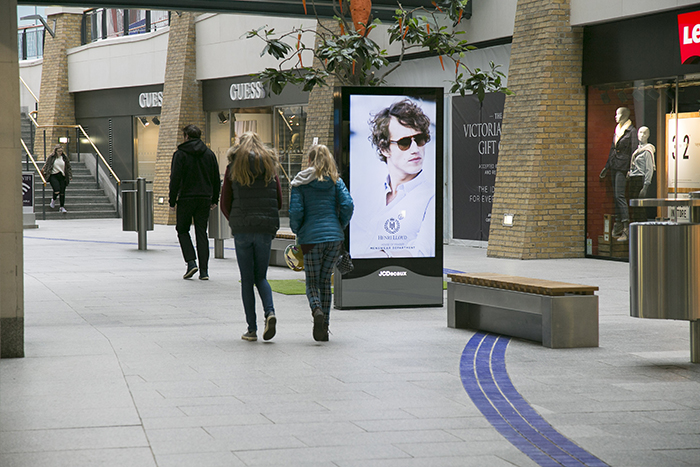
A typical digital signage network or a narrowcasting network is made up of a few components. Any person or company trying to build a basic Digital Signage network needs to gain access to signage software that manages and sends multimedia data from a computer to a network of TV screens or LED walls installed on location.
Using dedicated software, content can be created; then it is sent to the TV screens using the internet and signage players (or media players). The players do the heavy-lifting, meaning that they ensure all of the dynamic media content is played smoothly on the TV screens and without unwanted interruptions. Useful information including weather, RSS feeds, or even live TV can be shown on the screens along with ads, images, videos and so on.
Content displayed on your network of TV screens can be easily replaced or updated remotely — this is the main advantage over using local ads or messages, where almost everything has to be done manually, on location.
An inside look at digital out-of-home advertising
Whether you run a startup or an established company one of your primary goals should be to find better ways to communicate your messages to customers and partners worldwide. For many businesses, publishing dynamic media content in targeted locations is a viable option — in lieu of waiting for a consumer to see your message on a static outdoor advertisement.
According to an Arbitron study, “viewers are not just exposed; they are engaged. Nearly half (47%) of those who have noticed a digital place-‐based video display in the past month specifically remember an advertisement appearing on the screen. And nearly 1 in 5 (19%) of those who noticed an ad report having made a purchase they were not already planning on making after seeing an item featured on the video screen (though not necessarily within the same month).”
Studies also indicate that “Digital place-based video dwarfs many prominent new media and marketing platforms.” In fact, it is interesting to note that “more people see digital video screens in public venues than have a Facebook profile (41%) or a smartphone (22%).”
Ultimately, keep in mind that out of home (OOH) advertising has various benefits including: increased reach, geographic and demographic targeting, distinct seasonality, a visual component offering to a campaign and market wide penetration. Therefore, when reviewing your marketing and media campaign priorities, considering the use of digital out-of-home (DOOH) platforms — that serve dynamic media content — could be a viable option for your business.
Catalino Calacar is a content writer at MediaSignage Inc., a privately held company that provides free digital signage software that supports all of the latest web standards including HTML5, Flash, HD videos, MRSS, Weather, Live TV and offers a robust open source software development kit and more. Their goal is to offer the best digital signage solution that can propagate seamlessly to all digital mediums including electronic billboards, KIOSK, mobile, tablets and all types of screens. Connect with Media Signage Inc. on Twitter.
© YFS Magazine. All Rights Reserved. Copying prohibited. All material is protected by U.S. and international copyright laws. Unauthorized reproduction or distribution of this material is prohibited. Sharing of this material under Attribution-NonCommercial-NoDerivatives 4.0 International terms, listed here, is permitted.